

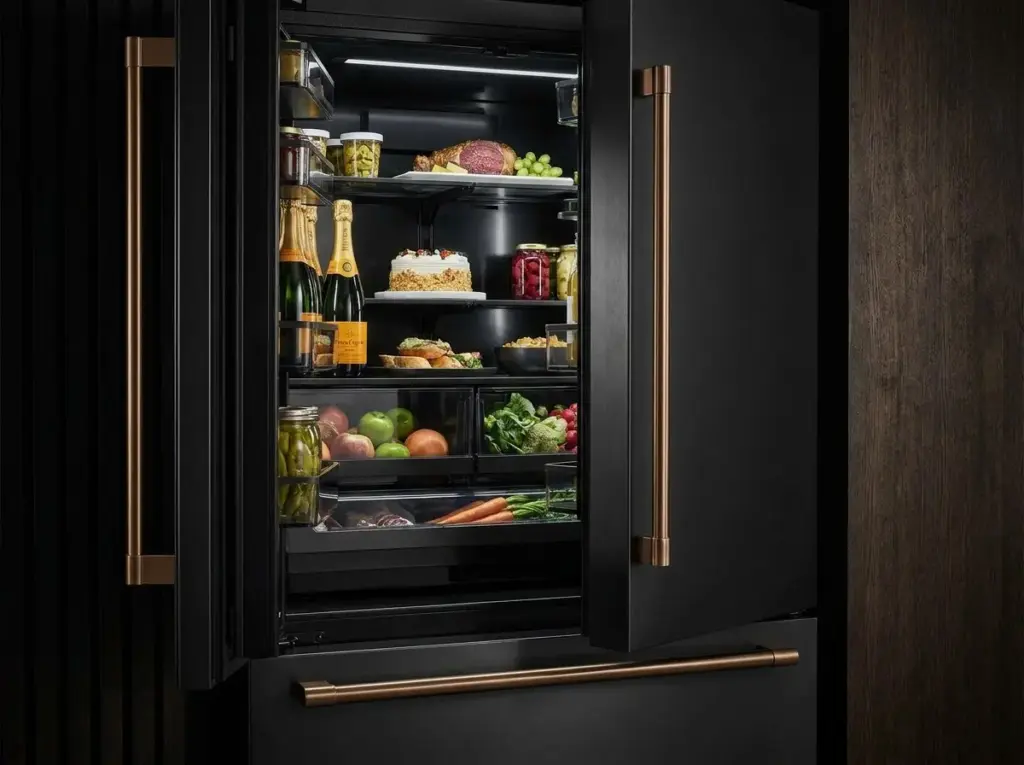
The JB36NXFXLE and its documented installation-manual counterpart JB36NXFXLW00 belong to an older generation of JennAir’s built-in column refrigeration, sold before the brand moved to its current JU-prefixed column naming. Columns from this era run the same basic architecture as JennAir’s refrigeration lineup today – a compressor, an evaporator fan, and a set of climate sensors – just without the connectivity features added to later models.
Because a column like this has likely been running continuously for well over a decade, our technicians start by isolating whether a warm compartment is a sealed-system problem or something simpler, like a sensor or a door seal that’s lost its shape.
Key Features
- 36" built-in refrigerator column
- Flush, panel-ready or finished-front installation
- Electronic climate control
- Documented in both a factory technical-education manual and a separate installation manual
Most Common Issues on This Model
Compressor or condenser fan problems after many years of continuous run time
Interior climate sensor drift causing one zone to read warmer than it actually is
Door seal hardening and flattening with age, letting warm air creep in
Control board problems following a power surge